(Online) Morphology in Interaction
Presenters: Mirjam Ernestus
Offered virtuallyVT2TFB3
Morphologically complex words could be viewed as words consisting of different parts (morphemes), which are combined during language production and taken apart during language comprehension. Research over the past 25 years have shown that this traditional view is too simplistic and that it does not do justice to the many interactions that morphologically complex words are involved in, with simple and other complex words, with the phonological and prosodic context they occur in, and with the phonetic reduction processes of the language. These interactions can only be noticed when morphologically complex words are studied in language use, rather than as dictionary items.
This workshop will discuss old and new research on morphologically complex words based on corpus research, psycholinguistic experiments, and computational modelling. We will discuss, among other studies, those showing that
- The frequencies of occurrence of complex words matter, for word recognition, production, and language change;
- The affix for a word (in case of allomorphy) is co-determined by systematic analogical effects from morphologically and phonologically similar words and by the prosodic context the word is placed in;
- The phonetic realization of complex words is affected by morphology: by the morphological category of the words, and the support for their affixes from morphologically similar words;
- The recognition of complex words is affected in several ways by phonologically and morphologically related words.
These findings have consequences for our view of morphology, the lexicon, word production, and word recognition. The workshop will discuss a variety of old and new theories taking (part of ) the findings into account, ranging for Lexical Phonology to the Dual Route model of complex word recognition, to Word and Paradigm Morphology, to Linear Discriminative models. Some of these theories have been computationally implemented and we will discuss the advantages and disadvantages.
Keywords: Morphology, Processing, Production, Productivity, Phonetics, Phonology, Variation, Lexicon
Tuesdays and Fridays, July 25-August 8, 10:30am - 11:50am (Virtual Only)
Tuesdays and Fridays
Presenters
Radboud University, Nijmegen
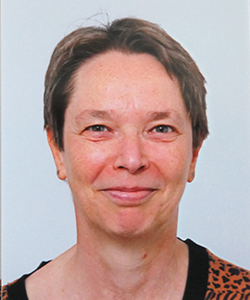
Mirjam Ernestus studied General Linguistics at VU University Amsterdam. In 1994, she started her PhD project at the same university, on the interface of phonology and phonetics, with a focus on incomplete neutralization and on pronunciation variation in informal speech. From 2000 – 2007, Mirjam was a post-doctoral researcher at the Max-Planck Institute for Psycholinguistics. She broadened her research interests to morphological variation, both variation in affix selection (allomorphy) and the exact pronunciation of affixes. She also started investigating research questions with a combination of methodologies: corpus research, psycholinguistic experimentation, and computational modeling. In 2007, Mirjam got a tenure position at the Radboud University, and, during the following ten years, she conducted research in three large projects, focusing on pronunciation variation. In 2019, Mirjam started a new project, explicitly continuing her research on morphology and morphological variation. In 2012, Mirjam became a full professor at Radboud University and served as the scientific director of its Centre for Language Studies for six years. Mirjam has been the general editor of the journal Laboratory Phonology (2015-2021), a member of the editorial board of Morphology since 2015, and the chair of the Editorial Board of the Radboud University Press since 2021.
Tuesdays and Fridays, July 25-August 8, 10:30am - 11:50am (Virtual Only)
Tuesdays and Fridays