Introduction to Pragmatics
Presenters: Lucien Brown
T1MRA1
Imagine you're at a café, and the person next to you says, “It's cold in here.” While the literal meaning of this statement is straightforward, the intended meaning could vary: it might be a simple observation, a request to close the window, or even a suggestion to leave. This subtlety is where pragmatics comes into play. Pragmatics is the branch of linguistics that looks at how context influences the interpretation of meaning in real-world interaction, and which investigates and interrogates the linguistic choices that speakers make.
In the first half of the workshop, we look at foundational topics in pragmatics including implicature, presupposition, speech acts and deixis. We explore why speakers don’t always say what they mean, and how hearers are able to interpret utterances that are underspecified. Then, in the second week, we look at the social turn in contemporary pragmatics by covering indexicality, (im)politeness, interactional pragmatics, and metapragmatics. Throughout the workshop, we consider examples from diverse languages and cultures, and also take into account non-anglophone and indigenous perspectives on language usage and context. Through theoretical frameworks and practical analysis, participants will gain a comprehensive understanding of pragmatic principles in everyday communication.
Keywords: Interaction, Pragmatics, Sociolinguistics
Room STB 253, Mondays and Thursdays, July 7-July 21, 9:00am - 10:20am
Mondays and Thursdays
Presenters
Monash University
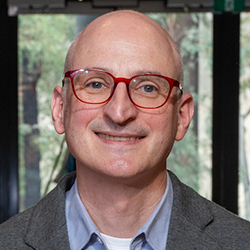
Lucien Brown is Associate Professor in the School of Language, Literatures, Cultures and Linguistics at Monash University, Melbourne, Australia. Prior to joining Monash in 2018, he worked at University of Oregon (2011-2017). He obtained his PhD in from SOAS University of London, UK. He is an Associate Editor of Journal of Pragmatics, and Editor of Korean Linguistics. His research in the field of pragmatics focusses on the contextual and situated ways in which language and other multimodal semiotic resources mark social meanings. He has particular expertise in researching the ways in which languages communicate politeness and impoliteness in multimodal ways. He has explored the importance of auditory modalities (i.e. phonetics) and visual modalities (i.e. gestures, embodied practices, etc.) in the communication of politeness and impoliteness, focussing on Korean. His work has also explored the ways in which speakers of Korean understand politeness in their own terms, which are often quite different to descriptions found in previous literature. His publications include Korean Honorifics and Politeness in Second Languages (John Benjamins, 2011), Multimodal Im/politeness (co-edited with Andreas Jucker and Iris Hübscher, John Benjamins, 2011) and Politeness Metapragmatics: Inductive Research, Multimodality and Critical Theory (Springer, Forthcoming).
Room STB 253, Mondays and Thursdays, July 7-July 21, 9:00am - 10:20am
Mondays and Thursdays