Interaction: A Journey from the Fringes to the Core of Linguistic Science
Presenters: Henrik Bergqvist, Karolina Grzech
T2TFE1
This workshop explores the relationship between linguistic theory and interaction. Its starting point is that natural conversation constitutes our most basic linguistic behaviour. Recent advances in neurolinguistic research (cf. Fedorenko et al. 2024) support this view, and confirm what cognitive-functionally oriented linguists have argued for since the 1970s, namely that language primarily is a communicative tool rather than an instrument of thought, as traditionally assumed by generative, rationalist research (e.g., Chomsky, 1968). Insights from the documentation of minority languages and the cross-linguistic comparison of data from these languages are in accord with the above: empirically adequate analyses of grammar require attention to how language is used in interaction.
The workshop will critically examine what we have learned so far about the role of interaction in shaping linguistic analyses. Its particular focus will be on epistemicity, understood as an umbrella term for expressions of knowledge in language, including, but not limited to, belief, certainty, evidence, and the distribution and of knowledge between the disworkshop participants. Methodological challenges will be discussed with reference to Grzech et al.’s (2020) special issue of Folia Linguistica, which deals with the study of knowledge in interaction, along with other recent contributions to the same area of research.
The workshop is aimed at attendees who are keen to explore how communicative interaction shapes and is shaped by linguistic phenomena. The attendees will be introduced to multiple-turn analysis and dialogical approaches to the study of forms.
Keywords: Field Methods, Interaction, Pragmatics, Corpus Linguistics
Room STB 253, Tuesdays and Fridays, July 25-August 8, 4:00pm - 5:20pm
Tuesdays and Fridays
Presenters
University of Gothenburg
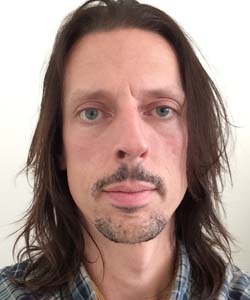
Henrik Bergqvist is Associate Professor and Lecturer in Linguistics at the University of Gothenburg. He has a long-standing interest in how knowledge is expressed in language, and he has worked in South-Eastern Mexico and Northern Colombia with speakers of the indigenous languages Lakandon and Kogi to document aspects of their grammars with a focus on epistemic marking. In collaboration with Nick Evans and Lila San Roque, he has formulated the linguistic notion of ‘engagement’, as a specific kind of epistemic marking strategy where the respective perspectives of the speech-act participants are situated with regard to some event. Henrik considers pragmatics and language use to be crucial for linguistic analysis in general and he is currently approaching the study of epistemic marking with this in mind. Together with Karolina Grzech, he has a project which aims to define the linguistic expression of evidentiality from its pragmatic properties and its use in conversation.
Universitat Pompeu Fabra
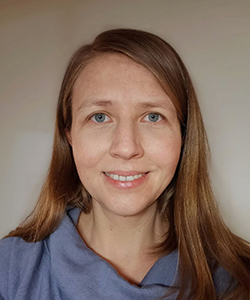
I am a descriptive linguist and language documenter, currently working as tenure-track professor at Universitat Pompeu Fabra. My work focuses on evidentiality and epistemicity, with emphasis on how these categories function in natural discourse. I am also interested in methodology of linguistic fieldwork, especially in relation to studying pragmatics and discourse. Since 2011, I have been conducting collaborative fieldwork on Quechuan languages of Ecuador: Upper Napo Kichwa, and, more recently, Tungurahua Kichwa. The data collected during the various documentation projects I conducted are deposited in the ELAR archive.
Room STB 253, Tuesdays and Fridays, July 25-August 8, 4:00pm - 5:20pm
Tuesdays and Fridays