
Eye Tracking in Psycholinguistic Research
Presenters: Zenzi Griffin
BMRB2
This workshop is designed for attendees with an interest in psycholinguistic research and no background in eye tracking. Attendees will gain both a broad understanding of psycholinguistic research and knowledge of this popular and influential method. Even attendees already familiar with eye tracking and psycholinguistics will gain a deeper understanding of both. We start by covering the principles of vision and visual attention that underlie the use of eye tracking as a research method. We review how eye trackers function to provide information about where participants look and considerations in designing experiments. We discuss the use of eye tracking measures and findings of studies in various domains of psycholinguistics including reading, first and second language acquisition, spoken and signed word recognition, spoken sentence and discourse comprehension, spoken word production and sentence planning, and dialogue. The workshop will consist of lecture, demonstrations, and group exercises. By the end, attendees will have a deep understanding of the strengths and weaknesses of eye tracking as a research method and be able to decide whether it is an approach they wish to pursue further. They will also be knowledgeable about the basic research questions and results in major areas of psycholinguistics.
Keywords: Experimental Methods, Processing, Production, Productivity, Psycholinguistics
Room STB 254, Mondays and Thursdays, July 7-August 7, 10:30am - 11:50am
Mondays and Thursdays
Presenters
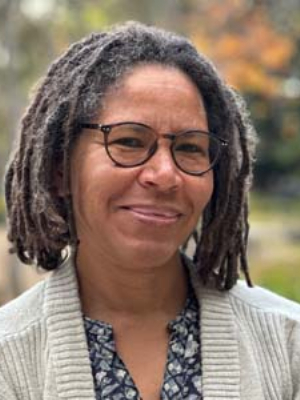
The University of Texas at Austin
Zenzi M. Griffin is a Professor of Psychology at The University of Texas at Austin with courtesy appointments in Linguistics and Speech, Language, and Hearing Sciences. She has a BA in Psychology from Michigan State University and a PhD in Cognitive Psychology with a minor in Linguistics from the University of Illinois at Urbana-Champaign. Before moving to UT Austin in 2008, she served on the Psychology faculties at Stanford and Georgia Tech. Dr. Griffin studies the psychological processes that result in speech. She has been particularly concerned with how far in advance people plan the words and sentence structures for their utterances and how this planning affects fluency. She pioneered the use of eye tracking to study sentence production. Current projects also address the learning and retrieval of personal names.
Room STB 254, Mondays and Thursdays, July 7-August 7, 10:30am - 11:50am
Mondays and Thursdays