Calendars, Math, and Data Science: A Non-Western and Historical Exploration
,
Holiday Inn Portland, Overton Room, Lower level
Have you ever wondered about how some calendars have a leap day while others just…don't? This project began as a deep dive into the calendars of different cultures, and it became an exploration into how calendars work to deal with the reality of our orbit. Earth orbits around the sun in approximately 365.2422 days, and this decimal causes problems for humans trying to make calendars.
Some calendars have tracked the moon, some have tracked the sun, and others have used both. Every calendar is based on these celestial bodies, which everyone could see from their own location on Earth. From there, they diverged into 18-month calendars, 13-month calendars…or even 52-year calendars. This exploration includes six calendars: Aztec, Chinese, Hebrew, Hindu, Islamic, and Gregorian.
In this workshop, you will play with numbers. You can read about the world's calendars, or skip that step and use "Ms. Sweet's Notes". Then build a spreadsheet to calculate which calendar is the most accurate after 19 years, and possibly take the challenge--52 years. Along the way, you will use spreadsheet "tricks" like how to write formulas, copy values, copy formulas across columns, which you can teach your students.
This mathematical exploration can be linked in with the movement of Ramadan and Chanukah (and other Islamic and Hebrew holidays) in relation to the Western Gregorian calendar. It can also be used for a couple days at the end of every February, leap year or not.

,
Holiday Inn Portland, Overton Room, Lower level
Workshop
Focus, Belonging
6-8, 9-12
Scroll down to view handouts.
Presented by
Founder
Sweet Math
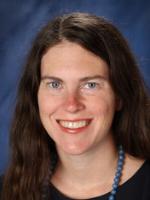
Lurline Sweet holds a BA from Reed College and an MAT from Marylhurst University. She also learned the craft of teaching as an apprentice teacher at Arbor School of Arts and Sciences’ Center for Teaching. Lurline initially began teaching math to 2nd and 3rd graders, but soon found herself teaching 4th through 8th grade math as well. She had the opportunity to work with both elementary and middle school math resources. This helped her identify the need for a more robust curriculum and activities to supplement secondary mathematical teaching and learning, leading to the foundation of Sweet Math.
Handouts
,
Holiday Inn Portland, Overton Room, Lower level
Workshop
Focus, Belonging
6-8, 9-12
Scroll down to view handouts.